Cat Line Art Set: A Designer’s Real-World Embroidery Review
First Impressions: Light, Lively, and Ready for Stitching
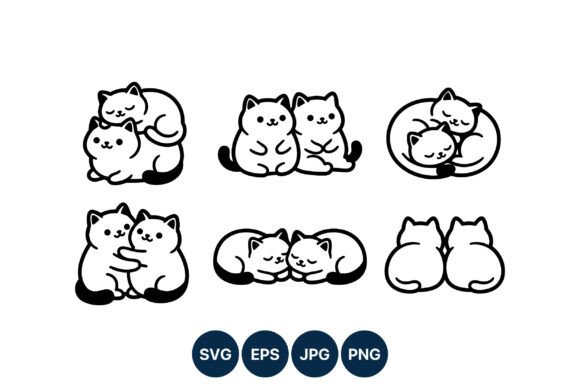
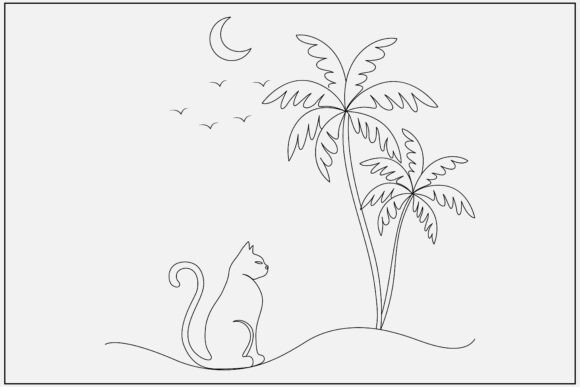
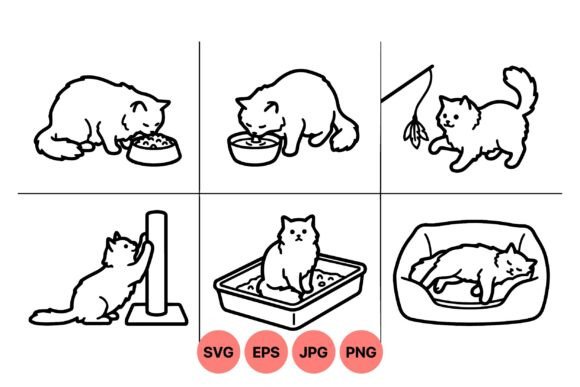
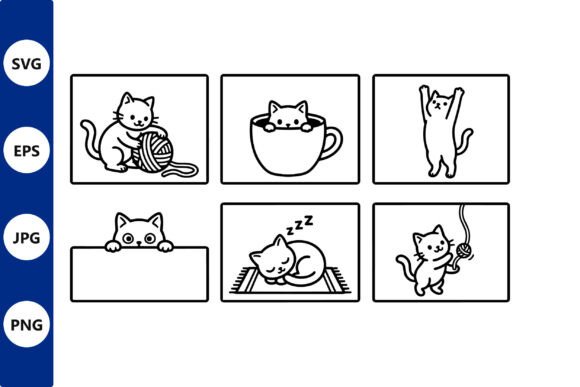
Opening the Cat Line Art Set, I immediately felt its quiet confidence — six clean, expressive black-and-white line art scenes, each featuring a playful cat interacting with everyday objects: yarn, a cup, a box, a string. No shading, no gradients, just confident strokes in simple cartoon style. It’s not cutesy overload — it’s clever, approachable, and visually uncluttered. That simplicity is exactly what makes this set promising for embroidery: low detail means fewer stitch complications, but strong personality ensures it reads well at small sizes.
A Real Project Test: Custom Embroidered Tote Bags for a Local Boutique
Last week, I prepped three tote bags for a neighborhood gift shop — cotton canvas, medium weight, natural undyed base. I chose the “cat with yarn” motif from the Cat Line Art Set for its gentle movement and clear negative space. After digitizing (using my standard 3-step process: auto-trace cleanup → stitch path optimization → density adjustment), I ran test stitches on scrap fabric first — always non-negotiable. The result? Crisp, legible lines at 3.5" wide. No broken threads. No skipped stitches. The design held up beautifully on textured fabric, thanks to its generous line weight and intentional spacing between elements.
Where This Set Truly Shines
- Custom apparel: Works especially well on sweatshirts and relaxed-fit tees — the line art’s soft rhythm complements casual wear without competing with fabric texture.
- Tote bags & tea towels: Its open composition avoids heavy fill areas, so it stitches quickly and lies flat — critical for items that get folded, washed, and reused daily.
- Baby embroidery & nursery decor: Gentle curves and friendly proportions make it ideal for onesies, burp cloths, or framed hoop art — parents appreciate charm without visual noise.
- Embroidered patches: Each scene translates cleanly into a sew-on patch. I tested one as a satin-stitched border + running-stitch interior — clean, durable, and distinctly handmade.
- Holiday and personalized gifts: Paired with subtle monogramming or a tiny seasonal accent (a single stitched leaf, a bow), it adds warmth without overwhelming — think embroidered kitchen towels for hostess gifts or baby shower keepsakes.
Where to Proceed Thoughtfully
The Cat Line Art Set isn’t magic — and knowing its limits is part of using it well. On stretchy fabrics like jersey or thin knits, I recommend light cutaway stabilizer and slightly reduced stitch speed. Tiny hoop sizes (under 4") demand attention: the “cat with string” scene includes fine loops that may need manual simplification before digitizing. Dark fabrics call for high-contrast thread — white or ecru works best to preserve line clarity. And while the set avoids dense fill areas, avoid layering it over seams, curved surfaces like cap fronts, or highly textured weaves without testing first. These aren’t flaws — they’re practical considerations every embroidery designer weighs before committing to a client or production run.
How It Shapes Perception — and Sales
Customers notice intentionality. When I used the “cat in a box” motif on an apron for a baker’s Etsy shop, buyers commented on how “thoughtful” and “cohesive” the branding felt — not because it was flashy, but because the line art carried consistent energy across product photos, mockups, and the finished item. That consistency builds trust. It also elevates perceived value: a clean, well-executed line art embroidery signals care, not haste. For craft businesses, that translates directly to higher conversion rates and repeat buyers who associate your work with quiet professionalism.
Practical Notes Every Embroiderer Should Check
- Test the Cat Line Art Set on scrap fabric matching your final project’s weight and weave — especially if using textured, dark, or stretchy materials.
- Review stitch density in your embroidery software — line art can easily become too sparse (fuzzy edges) or too dense (stiffness, puckering). Aim for balanced running stitch paths at 0.6–0.8mm spacing.
- Confirm hoop size compatibility early — some scenes scale beautifully down to 2.75", others read better above 3.25". Let your end use guide the choice.
- Inspect small details manually: tight corners, intersecting lines, and delicate loops. Simplify where needed — embroidery isn’t tracing; it’s interpretation.
- Use black-and-white mockups to preview contrast. What reads clearly on screen may vanish on charcoal linen or heather gray.
- Choose stabilizer intentionally: tear-away for stable wovens, cutaway for knits or lightweight cottons, and fusible for layered or delicate applications like baby blankets.
- Verify licensing terms before selling finished products or digital embroidery files — the Cat Line Art Set is listed as a digital download for commercial use, but always double-check scope (e.g., number of units, resale restrictions).
Final Thought: A Quietly Versatile Asset
This isn’t a trend-chasing design — it’s a quietly versatile illustration asset built for longevity. As an embroidery designer who regularly sources graphics for client projects, Etsy listings, and small-batch merchandise, I reach for the Cat Line Art Set when I need charm without clutter, clarity without complexity. It fits naturally into handmade product lines, boutique branding, and thoughtful gifting — not because it shouts, but because it listens to the fabric, the stitch, and the person who’ll hold the finished piece. If you’re curating design assets for real-world embroidery work, this set earns its place in your library — not as filler, but as a reliable, expressive tool.