Cute Cat Care Line Art: A Designer’s Real-World Embroidery Review
First Impressions: Calm, Clear, and Quietly Clever
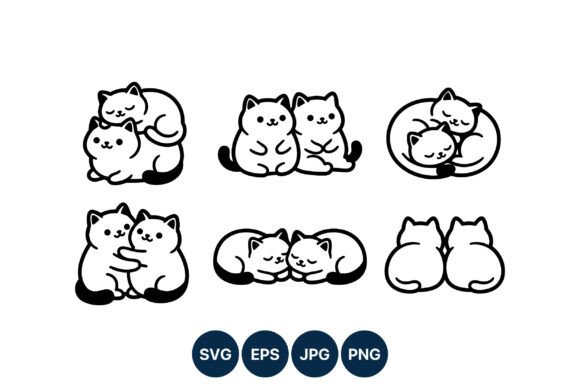
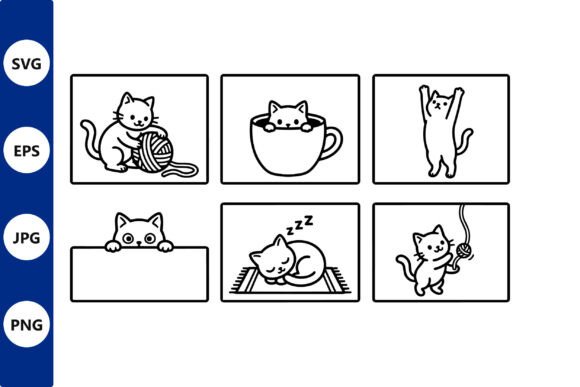
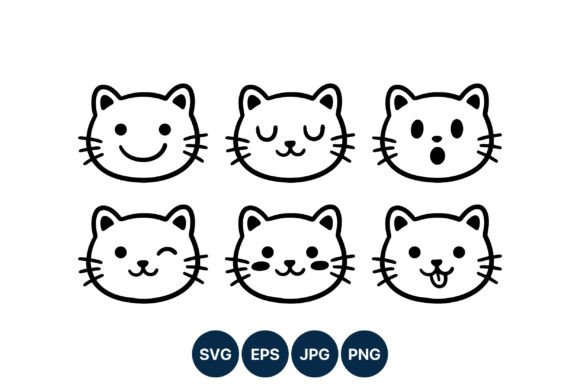
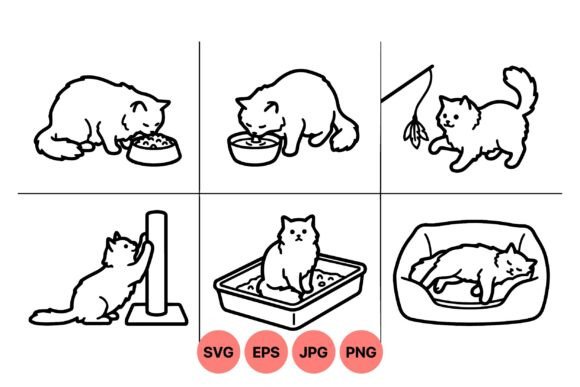
Opening the Cute Cat Care Line Art collection, I didn’t see “cute” first—I saw intention. These aren’t cartoon cats or exaggerated poses. They’re quiet, unhurried line drawings: a cat curled mid-stretch on a pillow, another delicately lifting a paw to scratch, one sitting upright beside a tiny bowl. The minimalist style isn’t minimal because it’s stripped down—it’s minimal because every curve, pause, and negative space serves purpose. As an embroidery designer who’s stitched hundreds of pet-themed files, I immediately recognized what this offers: breathing room for thread, clarity at small scales, and emotional resonance without clutter.
Why It Works So Well on Real Embroidered Products
Last week, I prepped a custom order for a local boutique: three matching embroidered tote bags—one for a new cat parent, one for a vet tech, one as a playful gift for a feline-loving teacher. I chose the “cat drinking” and “cat resting” motifs from Cute Cat Care Line Art and stitched them onto medium-weight canvas with 40-weight cotton thread. The result? Crisp, legible lines even at 3.2 inches wide—no bleeding, no stitch crowding, no need for heavy underlay. That calm mood translated directly into the finished product: soft but confident, handmade but polished.
This design shines where subtlety matters most: baby onesies (no bulky fill stitches near delicate skin), linen tea towels (the line weight holds up against texture), unisex sweatshirts (it reads as thoughtful, not cutesy), and embroidered patches meant for denim jackets or backpacks. Because it’s pure line art—no fills, no gradients, no shading—it converts cleanly to running stitch or satin stitch outlines. That means faster stitch time, lower thread consumption, and fewer tension surprises on textured or loosely woven fabrics.
Where to Use It Thoughtfully (Not Just Automatically)
Don’t assume Cute Cat Care Line Art is foolproof everywhere. Its strength is also its limit: it relies on contrast and clarity. On dark fabric? You’ll need high-contrast thread—think white or pale grey—not ecru or oatmeal. On stretchy knits like t-shirts or baby bodysuits? Stabilizer choice becomes critical: a light cutaway + tear-away combo keeps those fine lines from wavering during hooping and stitching. And on curved surfaces—like the front panel of a structured cap—the “toileting” or “scratching” poses (with extended limbs and narrow angles) may need slight manual adjustment to avoid distortion in the final embroidery file.
Also worth noting: while the line weight is consistent, some poses include tighter corners (e.g., the cat’s ear folded sharply, or tail curling under its body). Those details hold up beautifully at 3+ inches—but below 2 inches, test stitch first. Tiny lettering or supporting text? Not included here, so plan that separately. And if you’re building a cohesive brand system—say, for an Etsy shop selling cat-care themed kitchen linens—pair these illustrations with clean, readable fonts and muted thread palettes. Don’t fight the calm mood; deepen it.
What This Means for Your Craft Business
As an Etsy seller and small shop owner myself, I pay attention to how designs affect buyer trust—and Cute Cat Care Line Art builds it quietly. Customers don’t just buy a cat graphic; they buy tone, care, and intention. When someone orders a personalized gift—a baby’s first embroidered blanket with the “resting” cat—they’re signaling they value gentleness and authenticity. That aligns seamlessly with handmade presentation and thoughtful branding.
It also performs well in digital contexts: clean black-and-white mockups pop on product listings, printable mockups load fast, and social media previews retain legibility even when scaled down. For commercial embroidery projects—say, stitching 50 identical aprons for a cat café—the consistent line weight and low stitch density mean reliable machine performance across batches. No re-hooping mid-run. No thread breaks from dense fill areas. Just steady, repeatable quality.
Practical Notes Every Embroidery Designer Should Check
- Test first—on scrap fabric matching your final project’s weight and stretch.
- Confirm thread color contrast, especially on off-whites, heathers, or pastels.
- Review stitch density: though minimal, verify no sections run too thin for your machine’s minimum recommended stitch length.
- Check hoop size compatibility: these are scalable, but avoid pushing beyond your machine’s optimal range without testing.
- Inspect small details in both black-on-white and white-on-black mockups—what reads clearly digitally may blur when stitched.
- Use appropriate stabilizer: lightweight cutaway for knits, tear-away for stable wovens, fusible for layered items like pillow covers.
- Verify licensing before using in physical products for resale or bundling into digital embroidery bundles—Cute Cat Care Line Art is a Graphics asset, and commercial use terms vary by seller.
A Final Thought: Design That Serves the Stitch—and the Story
Some embroidery files shout. Cute Cat Care Line Art listens. It doesn’t try to dominate a garment or overwhelm a gift—it settles in, adds warmth, and invites a second look. Whether you’re stitching a single personalized pillow cover or producing 200 embroidered patches for a craft fair, this collection gives you flexibility without compromise. It’s not flashy. It’s not trendy. But it’s deeply usable, quietly versatile, and consistently kind—to your machine, your fabric, and your customer’s eye.
If your work lives at the intersection of craft business, thoughtful design, and real-world embroidery practicality, Cute Cat Care Line Art isn’t just another Illustrations download. It’s a reliable collaborator—one that shows up ready to stitch, not demand attention.