Playful Cat Vector Art: A Designer’s Real-World Embroidery Review
First Impression: Light, Lively, and Ready for Stitching
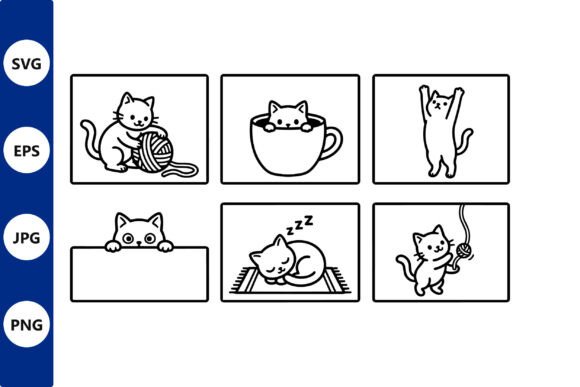
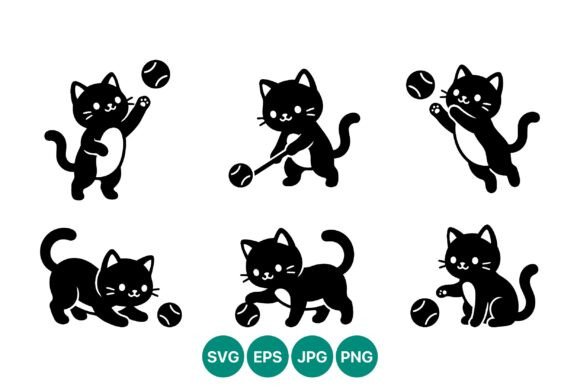
When I opened Playful Cat Vector Art, my immediate thought wasn’t “cute” — it was “clean.” Six black-and-white cats in varied, joyful poses, each interacting with a tennis ball. No shading, no gradients, no busy linework — just confident outlines and intentional negative space. As an embroidery designer who’s stitched hundreds of illustrations, I appreciated how the simple line art style translates directly to stitch-friendly shapes. It feels like a sketch you’d want to bring to life on fabric — not overthink, but trust.
This Isn’t Just Clipart — It’s Embroidery-Ready Illustration
I tested Playful Cat Vector Art as the centerpiece for a custom embroidered tote bag destined for a local pet boutique. The client wanted something cheerful but not childish — playful without being cloying. The design delivered. Because the silhouettes are bold and uncluttered, even at 4.5 inches wide, every cat reads clearly. No lost limbs, no ambiguous curves — just distinct, friendly forms that hold up under satin and running stitches. That clarity matters most when your finished product hangs on a shelf next to professionally printed items.
Where It Shines in Real Projects
- Custom apparel: Works beautifully on sweatshirts and crewneck tees — especially where contrast stitching (white thread on charcoal, black on cream) lets the cats pop without overwhelming the garment.
- Baby embroidery: Ideal for onesies or burp cloths. The minimal detail avoids tiny, risky fill areas that snag or fray after washing.
- Embroidered patches: Clean edges mean crisp heat-seal or sew-on results. No need to add extra underlay just to stabilize wispy lines.
- Kitchen towels & aprons: The tennis ball motif adds subtle thematic charm without leaning too hard into “cat lady” cliché — great for small shop branding.
- Holiday gifts & nursery decor: Paired with soft neutrals or muted pastels, it reads warm and handmade — not mass-produced.
Where to Pause — Not Problems, Just Practical Checks
Playful Cat Vector Art is strong, but no vector illustration is universally foolproof. Here’s where I slowed down:
- Small hoop sizes: At under 2.5 inches wide, some poses compress — especially the cat mid-leap. Test scaling before committing to a cap or cuff.
- Textured or stretchy fabric: On terry cloth towels or lightweight knits, stabilizer choice becomes critical. A light tear-away won’t cut it; go medium cutaway or hybrid.
- Dark fabric backgrounds: Since the design is black-and-white line art, white thread on navy or black needs careful tension tuning — otherwise, the fine lines can disappear into shadow.
- Curved surfaces (caps, mugs, curved pillow seams): The layout isn’t symmetrical, so placement matters. One cat’s tail might wrap awkwardly if centered poorly on a curved seam.
- Frequent-wash items: Avoid dense fill stitches in the tennis balls unless you’re using high-quality polyester thread and reinforcing stabilizer — repeated laundering will stress tight stitch clusters.
What It Adds to Your Finished Product — Beyond Aesthetics
As a designer who sells both digital embroidery files and finished handmade goods, I pay attention to how a design affects perception. Playful Cat Vector Art elevates professionalism because it looks intentional — not assembled from stock elements. Customers notice that. When someone buys a personalized gift or boutique item featuring this design, they don’t see “clipart.” They see craft, care, and quiet confidence in the composition.
For Etsy sellers and small shop owners, that impression builds trust fast. It also supports brand consistency: whether you’re offering embroidered tea towels, baby blankets, or custom patches, this illustration holds its own across categories without needing rebranding or heavy editing.
Practical Notes Every Embroidery Designer Should Run Through
- Always test Playful Cat Vector Art on scrap fabric matching your final project’s weight and texture — especially if using it for commercial embroidery or client work.
- Check thread color contrast in natural light — what reads well on screen may vanish on dark denim or heather grey.
- Review stitch density manually. Even simple line art can generate unexpected jump stitches between cats if the digitizing isn’t optimized.
- Confirm hoop size compatibility before digitizing — the full six-cat layout may require a 5x7 hoop minimum for comfortable spacing.
- Inspect corners and curves closely. Minimal detail doesn’t mean zero detail — those tennis ball seams and paw angles should stay legible post-stitch.
- Test black-and-white mockups first. This design lives in contrast — make sure your background fabric doesn’t mute the visual rhythm.
- Use proper stabilizer — medium cutaway for knits, tear-away for stable cottons, and avoid lightweight fusibles unless you’re adding a backing layer.
- Verify licensing terms before selling finished items or bundling Playful Cat Vector Art into digital product kits — especially for resale on Etsy or craft platforms.
A Design That Serves the Maker First
At its core, Playful Cat Vector Art succeeds because it respects the maker’s time and tools. It doesn’t ask for excessive digitizing labor, doesn’t demand specialty threads or machines, and doesn’t rely on perfect lighting or flawless fabric to land. It’s versatile enough for a holiday embroidery batch, precise enough for a boutique patch order, and expressive enough to feel personal on a baby blanket.
If you’re evaluating this as part of your design assets — whether for your craft business, Etsy shop, or next client project — know this: it’s not just another illustration. It’s a thoughtful, stitch-smart starting point. And in embroidery, that kind of foundation saves hours, avoids rework, and keeps your handmade presentation polished, consistent, and quietly confident.