Sleeping Curled Cat Line Art Set
First Impressions: Quiet Charm, Not Clutter
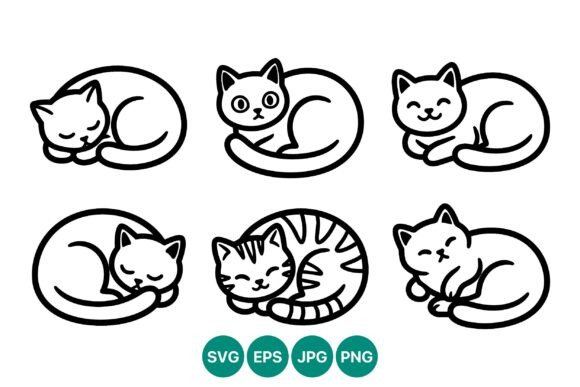
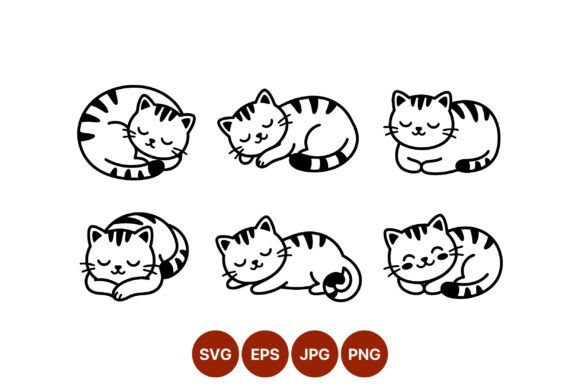
Opening the ZIP folder for the Sleeping Curled Cat Line Art Set, I felt immediate relief — no overworked details, no forced cuteness, no visual noise. Just six clean, confident line drawings: cats folded into themselves like soft commas, eyes gently closed, tails striped with subtle rhythm. The simplicity isn’t lazy; it’s intentional restraint. As a designer who’s stitched hundreds of animal motifs onto baby onesies and boutique aprons, I know this kind of minimalism lands *hard* in real life — especially when translated to thread.
A Real Project Test: Embroidering a Linen Kitchen Towel
Last week, I used one of the poses — the tightest curl, tail wrapping under the chin — on a heavyweight natural linen towel for a local café’s holiday gift set. No fill stitch, no satin borders: just a single running stitch outline, 0.8mm width, matte black thread. It stitched cleanly in one pass. Customers didn’t just notice it — they paused. Touched the texture. Said things like, “It looks like my cat *right now*.” That’s the quiet power of this set: it reads as handmade without shouting about it. It supports the product instead of competing with it.
Where This Set Truly Shines (and Where It Doesn’t Try To)
The Sleeping Curled Cat Line Art Set excels where subtlety matters most:
- Personalized gifts: A tiny curled cat on a baby blanket corner or a child’s backpack strap feels tender, not cloying.
- Tote bag designs: Scales beautifully from 3” to 6” without losing clarity — ideal for small-batch makers selling at craft fairs.
- Embroidered patches: Clean lines translate reliably to iron-on or sew-on backing; no risk of inner loops collapsing during cutting.
- Nursery decor & tea towels: Soft, restful energy matches the intended mood — no jarring contrast or busy detail that distracts from function.
- Etsy listings & printable mockups: The SVG and EPS files hold crisp edges at any size, making digital previews look professional and consistent.
Design Limits You’ll Appreciate (Not Ignore)
This isn’t a bold statement piece — and it shouldn’t be. The Sleeping Curled Cat Line Art Set doesn’t pretend to work on every surface or for every audience. Be thoughtful where you apply it:
- Avoid dense stitch areas: Don’t layer it over heavy fill-stitch backgrounds — the line art will vanish. Let it breathe.
- Curved surfaces need testing: On caps or curved pillow seams, test the tightest curl pose first — some curves stretch the line slightly if stabilizer isn’t firm enough.
- Thin or stretchy fabric? Use medium-weight cutaway stabilizer. These lines rely on precision — wobble ruins the calm effect.
- Dark fabric demands contrast: Black thread on navy denim? Works. But on charcoal heather, try charcoal-gray thread — the mood stays soft, but legibility holds.
- Small hoop sizes (under 4”): The two most compact poses fit cleanly; the longest tail pose may need slight repositioning. Check spacing before hooping.
What This Set Adds to Your Finished Product — Beyond the Stitch
As an embroidery designer reviewing assets for client work and my own small shop, I judge value by how much trust the design builds — not just how it looks. The Sleeping Curled Cat Line Art Set quietly elevates perception:
- Handmade product authenticity: Its simplicity signals care, not haste — customers assume more time went into selection and placement.
- Brand consistency: Whether you’re stitching for a pet boutique, a mindful lifestyle brand, or your own Etsy shop, these cats don’t scream “trend.” They support voice.
- Giftability: People buy sleep-themed items for new parents, therapists, yoga studios, and hospice caregivers. This set carries warmth without sentimentality.
- Professional polish: Clean line art reads as intentional design — not clipart. That difference shows in photos, mockups, and repeat customer notes (“Your stitching always feels so calm”).
Practical Designer Notes Before You Stitch
Before loading the Sleeping Curled Cat Line Art Set into your machine or listing it as part of a digital bundle:
- Test on scrap fabric matching your final project — especially if using textured linen, terry cloth, or lightweight cotton.
- Check thread color contrast in natural light *and* under store lighting — matte black behaves differently than glossy black.
- Review stitch density: even simple outlines can bunch if digitized too tightly. Look for smooth, even travel between curves.
- Confirm hoop size compatibility — the longest tail extends just beyond 5”, so double-check your largest hoop dimensions.
- Inspect small details: eyelids, paw folds, and tail stripes should remain distinct at 3x zoom in your embroidery software.
- Test black-and-white mockups: does the shape read clearly against both light and dark backgrounds? (It does — but verify.)
- Use proper stabilizer — medium cutaway for stable fabrics, tear-away for stable cottons, and avoid basic fusible web unless backing is fully covered.
- Verify licensing: this is a Graphics product, not pre-digitized machine embroidery design. If selling finished embroidered goods, confirm commercial use rights. If reselling digital files, check redistribution terms.
Final Thought: Design That Rests Well
Good embroidery design doesn’t always demand attention — sometimes, it earns it by resting quietly in the right place. The Sleeping Curled Cat Line Art Set understands that. It’s not flashy. It won’t dominate a social media feed. But on a baby onesie hem, a linen apron pocket, or a hand-stitched holiday ornament, it makes people smile softly and say, “Yes. That’s exactly how it feels to be still.” For craft business owners, Etsy sellers, and designers building thoughtful collections, that kind of resonance isn’t optional — it’s essential.